
Mohnish Pabrai whose company handles funds to the tune of $464 mn spoke at length about his investment decisions in Mumbai

'The CEO will neither be able to guide the senior team in operational matters nor decide on their appointment, compensation or removal.' 'Yet, the CEO is responsible for the profit and loss of the bank!' 'Why would the senior executives listen to him?' 'Which self-respecting professional would want to be a CEO with these constraints?' asks Tamal Bandyopadhyay.

The insurance regulator wants the removal of the minimum entry capital requirement of Rs 100 crore for setting up an insurance business in a bid to facilitate the entry of multiple players such as standalone micro insurers and niche players. Debasish Panda, chairman, Insurance Regulatory and Development Authority of India (Irdai), said it should be left to the regulator instead to decide what should be the entry fee for interested players, depending on the size of the business and operations. According to the current norms, insurers are required to have a minimum paid-up capital of Rs 100 crore.

Chinese tech unicorn ByteDance co-founder billionaire Zhang Yiming on Thursday announced that he will step down as CEO, in a surprise move that signalled a major leadership shake-up at the nine year-old technology firm which created popular global short-video app TikTok. Zhang, 38, who is one of China's wealthiest entrepreneurs, said he is ready to step down after nearly a decade of running the world's largest unicorn, becoming the latest among the country's technology founders to quit in their prime. Zhang will step down from his role as CEO of the Beijing-based ByteDance, giving up his day-to-day responsibilities to "be more impactful on longer-term initiatives," the Hong Kong-based South China Morning Post quoted the company announcement on Thursday.
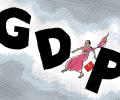
India's economy is expected to grow 7.5-8 per cent this fiscal year with exports playing a key role in the country's success story, CII president TV Narendran said on Monday. However, he said the country needs to remain prepared for any fallout of next wave of COVID-19 pandemic, and the impact of the ongoing Russia-Ukraine war. "We are confident that the economy can retain a high growth trajectory this year. "So, we are very optimistic on the export front. "Exports will be a key component of India's success story going forward," Narendran said.

Here are some of the most frequently asked questions about PMS, answered!

'They can shift to dynamic asset allocation funds to automatically rebalance their equity exposure.'
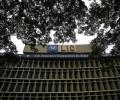
The government is unlikely to come up with the IPO of Life Insurance Corporation (LIC) in the current financial year ending March 2022, as the valuation of the state-owned behemoth is taking more than anticipated time, and the preparatory work is still far from complete. There are still some issues that need to be addressed with regard to the valuation of LIC, a senior official of one of the merchant bankers said. Even after the valuation, there are several regulatory processes that have concluded, the official said.
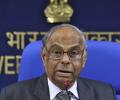
It is time for the three finance ministers of the 1990s to reveal the real hero, says T C A Srinavasa-Raghavan.

Invest early. Plan your taxes.
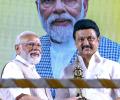
On one hand, South Indian states have been complaining about denial of a proportionate portion of the sharable funds from the Centre, based on population. On the other hand, they stand to lose Lok Sabha and Rajya Sabha seats that again are based on population, points out N Sathiya Moorthy.

The central government has agreed in-principle to Air India employees' main demands. It fears an industrial dissension now could impede the process of privatisation. It has agreed to bear the cost of liquidation loss on account of transfer to the Employees' Provident Fund Organisation (EPFO) from company-owned trusts, inclusion of employees in the central government health scheme (CGHS), and encashment of leaves. The template of the Air India process will be followed for other public sector undertakings up for privatisation at a later date.

As the feud continues between Zee and Invesco, appellate body NCLAT on Thursday directed the National Company Law Tribunal (NCLT) to give reasonable opportunity to the media major to reply to Invesco's plea for holding a meeting of shareholders, and also remarked that the tribunal made an "error" by not providing sufficient response time. With the order capping a day of fast legal developments at the NCLAT as well as the NCLT within a span of a little over an hour, the spat between Zee Entertainment Enterprises Ltd (ZEEL) and minority shareholder Invesco will now come up for hearing before the NCLT on Friday. Invesco is seeking the ouster of ZEEL MD and CEO Punit Goenka and appointment of six new directors on its board.

Benchmark indices failed to sustain gains and retreated from day's high dragged primarily by the losses in metals, information technology and bank shares as investors started to book profits in late noon deals. Earlier, markets had scaled fresh all-time highs on the surprise post-budget rate cut by Reserve Bank of India (RBI). The 30-share Sensex ended down 213 points at 29,380 and the 50-share Nifty closed down 74 points at 8,922. Intra-day, Sensex reached the all-time high mark of 30,024.74 while Nifty touched the life-time high level of 9,119.20. In the broader market, both the BSE Midcap index and Smallcap indices, down 1% and 1.2% each underperformed the front-liners. Market breadth in BSE ended negative with 1,882 declines against 1,010 advances. A day after signing an agreement with Finance Ministry on inflation targeting, RBI surprised the markets with an early post-budget repo rate cut of 25 bps (basis points) to 7.5% from 7.75% which was again outside of central bank's scheduled policy review meetings as the earlier rate cut effected on January 15. "RBI's latest rate cut of 25 basis points, while a surprise in its timing is in-line with our expectations of a sharp rate-cutting cycle over the coming quarters. With inflation sustainably lower by 500bps, the RBI has in recent months acknowledged the scope for rate cuts and was only waiting for additional comfort that the government's fiscal policy would not play spoil-sport," said Dinesh Thakkar, chairman and managing director at Angel Broking in a note. Analysts at Karvy believe that further monetary policy action will depend on number of factors including easing of supply constraints, improved availability of power, land, minerals and infrastructure, fiscal consolidation, the pass through of rate cuts by banks and the expected monsoon. Citing weakness in some sectors of the economy and the overall global trend towards monetary easing as rationale for the rate cut the central bank also exuded confidence in the road map for fiscal consolidation as laid out in the Union Budget, 2015. Commenting on how the markets reacted to RBI's surprise move, K Subramanyam assistant vice-president (institutional research), Asit C. Mehta Securities said, "The unexpected cut did take the market by surprise .However, credit off-take is not dependant only on interest rates. A gradual revival in the economy would be of more help which would trigger credit off-take. Hopefully this will follow and RBI's action would prove helpful. From market point of view this is bullish as equity becomes more attractive vis-a-vis falling interest rates." On the macro-economic front, the HSBC services PMI rose to an eight-month high of 53.9 in February up from 52.4 in January indicating strong expansion in output across the sector. Respondents cited robust growth of new business as the principle factor for the increase in activity. Meanwhile, foreign portfolio investors (FPIs) bought shares worth a net Rs 773 crore on Tuesday, as per provisional data. Buzzing Stocks 9 out of the 12 sectoral indices of BSE ended in red. BSE Metal index, down 2.4% was the top loser followed by BSE Oil & Gas and Power indices, down 1.3% each. BSE Healthcare index, up 1.2% and BSE FMCG index, up 0.9% were the top losers. Bank stocks came under during late noon trades as traders booked profits at higher levels. However, RBI rate cut may encourage large lenders to cut their lending rates boosting demand for home and auto loans and provide funds for various stalled and new projects. Many stalled projects across the country are waiting for cash to restart work. The stock of stalled projects at the end of December 2014 stood at Rs 8.8 lakh crore or 7% of GDP. ICICI Bank ended down 0.1%, Axis Bank and SBI declined over 3% and HDFC Bank shed 1.5%. Sun Pharma gained over 6% on approval granted to Sun Pharma Advanced Research Company (SPARC) by US FDA for an antiepileptic drug. The product will be manufactured by Sun Pharmaceutical Industries at its Halol (Gujarat) facility in India. SPARC was formed in 2007 when Sun Pharma separated out its active projects in drug discovery and innovation into a new company. Dr Reddys Lab and Cipla have gained over 1% each. ITC gained over 1% after consecutive sessions of losses on the proposed larger-than-expected hike in excise duty on cigarettes in the Union Budget. The biggest ever auction of spectrum by the Department of Telecommunications (DoT) started on Wednesday in the morning where government expects to garner Rs 80,000-1lakh crore from the sale of spectrum. Idea Cellular gained over 2%, Reliance Communication gained around 1% and Bharti Airtel closed 0.5% higher. Metal stocks were under pressure in today's session. Hindalco declined over 3%, Sesa Sterliteended down over 4% and Tata Steel closed down 2%. Profit-taking in IT stocks led to Wipro losing around 1.8%, Infosys declining 0.7% and TCS losing 1.5%.

US President Joe Biden and his Chinese counterpart Xi Jinping on Monday held their first in-person meeting in Bali, with both leaders underscoring the need to manage their differences and prevent a conflict, amid Beijing's coercive military posturing against Taiwan and in the strategic Indo-Pacific region.

The referendum will have long-term implications for Indian companies, which earn a substantial portion of revenue from the region.
Investing in mutual funds is a challenging task. Here's what you must know before you start your mutual fund investments.

Capital markets regulator Sebi on Tuesday asked listed companies to work towards splitting the roles of chairman and managing director before the April 2022 deadline, as the new directive is not aimed at weakening the position of promoters. Listed entities were initially required to separate the roles of chairperson and MD/CEO from April 1, 2020 onwards. However, based on industry representations, an additional time period of two years was given for compliance. The regulation will now be applicable to the top 500 listed entities by market capitalisation, with effect from April 1, 2022.

The ED case follows the police complaint for alleged criminal conspiracy and defrauding investors.

'India needs to adopt a more proactive policy of triggering exports to China.'

The government will "notify such countries or territories outside India to which a data fiduciary may transfer personal data", according to the draft unveiled on Friday for public feedback.

Twitter said it will continue to be strictly guided by principles of transparency, a commitment to empowering every voice on the service, and protecting freedom of expression and privacy under the rule of law.

'Banking is a business of trust.'
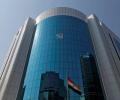
In the high profile co-location case, markets regulator Sebi on Wednesday imposed a penalty of Rs 1 crore on the NSE for failing to provide a level-playing field for trading members subscribing to its tick-by-tick (TBT) data feed system. In addition, the regulator levied a fine of Rs 25 lakh each on NSE's former managing directors and chief executive officers Chitra Ramakrishna and Ravi Narain. Alleged lapses in high-frequency trading offered through NSE's co-location facility came under the scanner of the watchdog after a complaint was filed in 2015.

The one-size-fits-all approach adopted by the AICTE is not suitable for regulating business schools in India, argues Asish K Bhattacharyya.
'Investors should plan and make investments strictly on the basis of their risk profile.' 'They should not bite more than they can chew.'

In all this, the political establishment -- and especially the finance ministry -- appears the weakest link, and worse still, the possible reason for the political backing to Narain and Ramkrishna that emboldened them to defy all the sentinels -- the independent board, the auditors, top management persons like the chief compliance officer, the company secretary, and unbelievably the super-regulator Sebi, observes V Ranganathan.
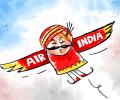
Air India sale will give a boost to India's privatisation drive, the Economic Survey said on Monday, as it suggested redefining the public sector role in business enterprises to encourage private participation in all sectors. The government earlier this month handed over ownership rights in national carrier Air India to Tata Group for Rs 18,000 crore. The amount includes the takeover of the debt burden of Rs 15,300 crore and another Rs 2,700 crore in cash.
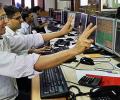
Only if you are a conservative investor satisfied with index returns; but over long term actively managed funds give better returns in Indian markets

A 'timing plus SIP' method could match the commitment of x in ordinary months and commit say, 2x or 3x in months where there has been a big correction.

'We try to pick up stocks early and hold onto them for the long term.' 'We are not someone who buys and sells on a daily basis.'
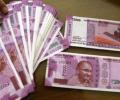
To ease pressure due to the coronavirus lockdown, corporate have asked banks and the government for a six-month liquidity line, so that they can pay off their suppliers and employees.

Yadav also called for firming up of an Opposition alliance to take on the BJP in the 2024 general elections, suggesting that the Congress must focus on over 200 seats on which it is in direct fight with the saffron party, while taking a 'backseat' in states where regional parties are a formidable force.
Lay investors should steer clear of pharma funds and instead invest in a well-managed diversified equity funds.

Among the key demands of agitating farmers has been a legal guarantee on minimum support price (MSP). The protest reached a crescendo when thousands of farmers from Punjab and elsewhere marched towards Delhi late last year and decided to block the main entry points once they were denied entry. The Centre, on its part, held 11 rounds of discussions with the protesters and even offered to amend some of the provisions without much success. With now one of their chief demands met, farmers have now moved on to force the government to concede on MSP.
The country's leading fund manager UTI Mutual Fund is likely to enter the capital market with its public issue by the end of current fiscal and has already got the approval from its board for the IPO.
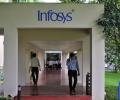
Starting its journey with a gross revenue of $5 million during its stock market debut on June 14, 1993, Infosys has reached dizzying heights, with a revenue of $10.93 billion in 2017-18

IndiGo promoter Rakesh Gangwal has written a letter to markets regulator Sebi flagging governance issues at the company and has accused fellow co-founder Rahul Bhatia and his firms of indulging in questionable related-party transactions.

The minister emphasised that India will play its due role in advancing global food security and it will do so in a manner in which it upholds equity, displays compassion, and promotes social justice.
